Fresh pasta is one of those things, that I really had no idea how easy it would be to make. Once I learned I could make sourdough pasta from my leftover sourdough discard, I was sold! Like most sourdough bakers, I always have a jar of discard in my fridge, and I love to add it to anything I can. The other piece that didn’t dawn on me until after I had been making it for a while, was storage! I was always making it fresh for the meal we were having that day, until recently when I have started making larger batches and drying it for future use. This makes things so convenient, and helps when you want a home cooked meal but you have a time limit.
A great plus about making sourdough pasta, is that the ferment can be anywhere from 1 hour to 3 days. The longer you let it sit, the more fermented your dough will be. Which if you are trying to help your body, by making things more digestible, then this really is a great benefit! The longer it ferments, the better the flavour develops as well, so I do recommend leaving it at least 24 hours, but again thats not totally necessary.
What you need:
- Mixing Bowl
- Dough Whisk or Wooden Spoon
- Rolling Pin or Pasta Roller (I have this one and love it!)
- Optional for storing: Dehydrator, Drying Rack, Coat Hangers
- For Storing: Sealed Container or Ziplock Bags
Ingredients:
- All Purpose Flour
- Salt
- Sourdough Discard (If you don’t have your own starter, check out how to make one here!)
- Eggs
- Cold Water
How to make Sourdough Pasta?
Start by adding flour & salt to your mixing bowl, and whisk to incorporate. I have used fresh milled flour for this recipe. You do need to increase your wet ingredients, when using fresh milled. You can also use 00 flour, but for simplicity sake, we are using all purpose for this!
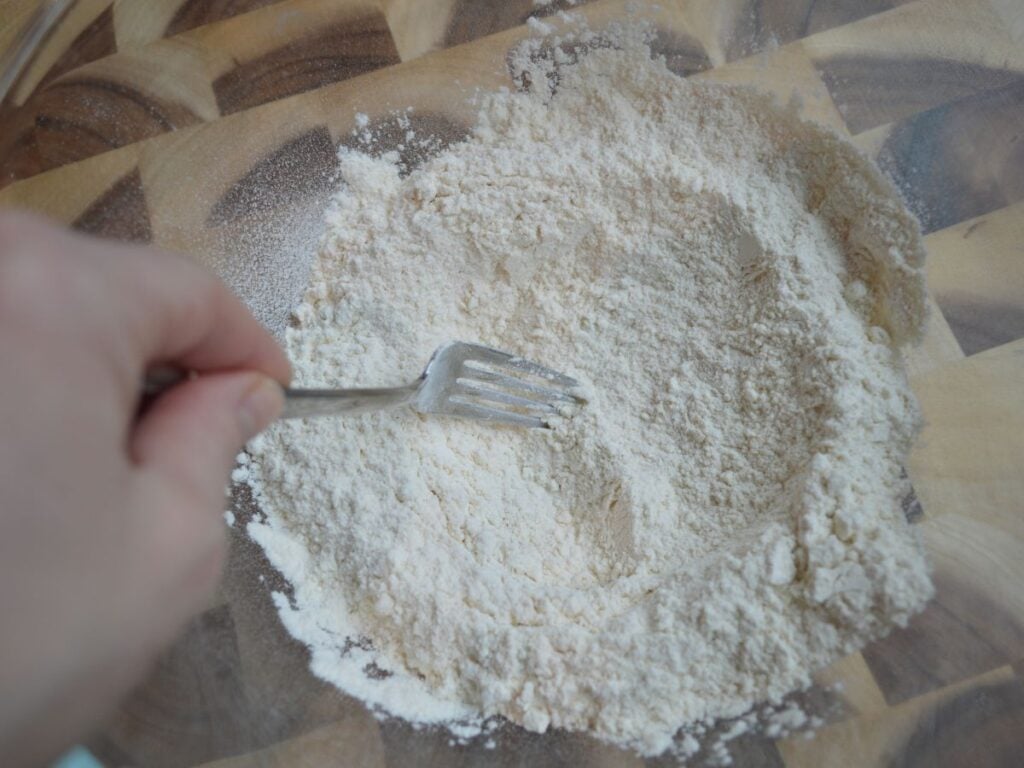
In the centre of the flour and salt mixture, create a well to add your wet ingredients. Many people make their pasta just on a flat work surface, I always make a GIANT mess, so I use a bowl

To the well you have created, add your eggs & sourdough discard. Do not add cold water yet, as you may not need it. Sometimes, depending on the consistency of your sourdough starter, you may need to add some to get everything mixed. For example: if your sourdough starter is super flat and runny, you may not need to do this. If your starter is more active, then your dough will be stiffer and you may find that adding a bit of water allows you to mix your dough together.


Begin gently mixing eggs and sourdough starter together, and as you mix pull flour in from the sides. Continue mixing until ingredients are incorporated and a shaggy dough forms. This is the stage you may need to add water. Once dough has come together a bit, dump it out onto a flat work surface. Depending on the feel of your dough, if it is stickier then you may want to flour your surface, if it is dry then I would not worry about that.

Begin kneading the dough, for about 5-10 minutes, until it is smooth. This can take some effort, but it’s a good arm workout at least! Again if things are really not coming together, don’t be afraid to add a splash of cool water. Dough should be nice and smooth, but still quite stiff after kneading. It will become more supple after it ferments. There are some recipes that use a mixer for the kneading, I personally do not, because I am not sure my old mixer can handle it, but feel free to use one if yours will!


Once your dough is smooth, it is ready for its ferment and resting period. This can be as little as an hour on the counter, or up to 3 days in the fridge. I love the flavour of the sourdough pasta, when it has been left for a couple days. In all honesty, I am hardly ever prepared for that. So I usually make my dough in the morning ,and put it in the fridge until that evening. Wrap the dough in plastic wrap, or a beeswax wrap. Whatever you have that will seal it, so that a hard crust does not develop on the surface.
Allow dough to ferment, how ever long you decide!
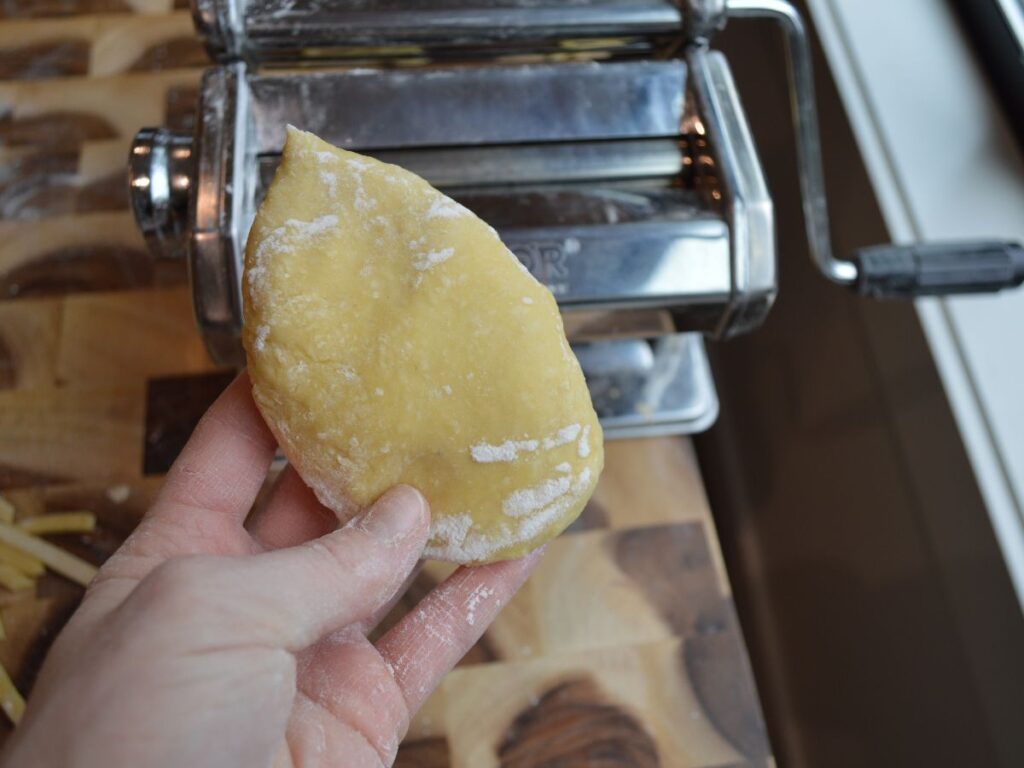
When you are ready to cook your pasta, take dough out and divide it into 4 equal pieces!
It is time to roll! You can do this with a rolling pin, or a pasta machine. The trick to rolling pasta, especially through a pasta roller, is to keep both sides well floured. When hand rolling, roll the dough out as thin as you can, into sheets. Using a sharp knife or pizza cutter, cut into desired shape, or lease as sheets for lasagna.
If using a pasta machine, run dough through a couple of times on the lowest setting. Folding it over itself in between each roll. Once it is soft and elastic, increase machine with each roll, until desired thickness is acheived. Then roll it through the cutting edge, for desired shape.


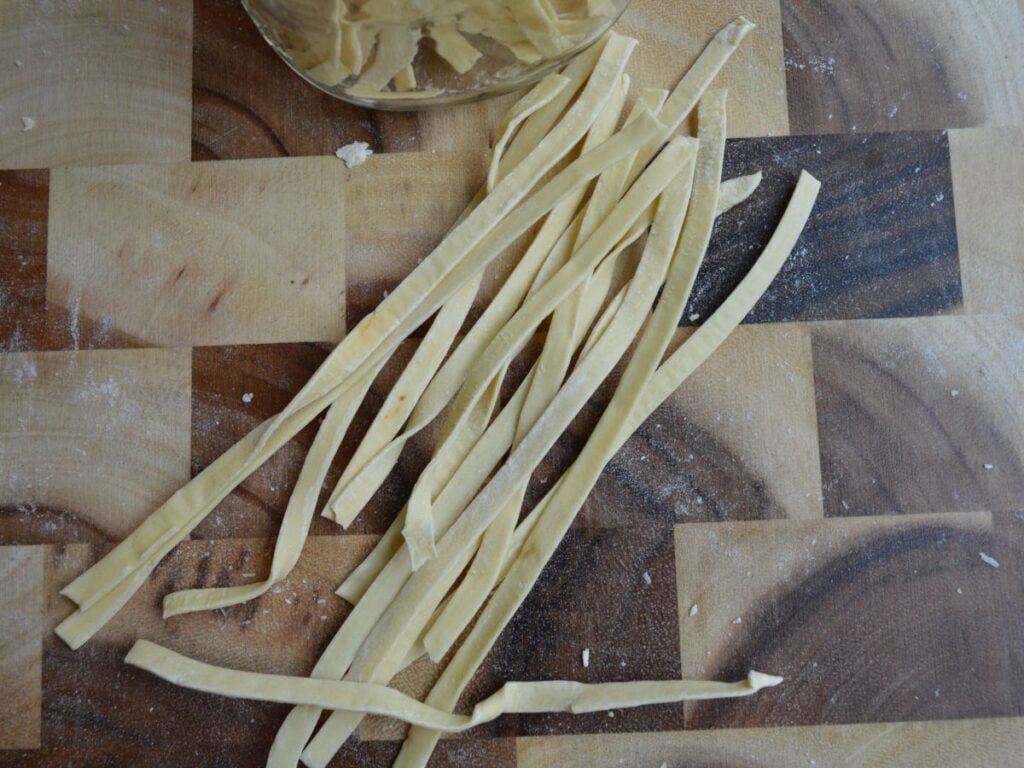
After I have my pasta cut, I will hang it on coat hangers and allow it to dry for about 10 minutes before cooking. You can lay them out flat on your counter as well.


Cooking Sourdough Pasta:
When you are ready to cook your pasta, bring a large pot of water to a boil. Once it is boiling, add a tablespoon of salt to your water. Adding salt to pasta water is key, it makes all the difference in a great pasta dish!
Then add your noodles, and boil for about 5-6 minutes, until they are tender. Strain noodles and serve in any pasta dish you are creating!
A Note About Lasagna Noodles:
If you are making sheets for lasagna- Do not pre-cook them! If you boil your pasta sheets before assembling your lasagna, I have found that the lasagna will come out watery. Instead just assemble your lasagna with the rolled out sheets, the sauce in the layers will cook them!

How to Store Sourdough Pasta:
If you are wanting to save some of your pasta for another day, or you are just batching it up for longterm storage- here are two ways I prepare mine:
Drying:
You can use a dehydrator for this, I spread my pasta out fairly evenly along the trays. Then place inside at 57 C (135 F) for 4-6 hours. You will know they are finished when they are dry and brittle and snap easily. I love my Bench Foods Dehydrator for this, I can get a large batch dried in a pretty short amount of time! (Check them out here- Use code XVIACRES for 10% off))


If you do not have a dehydrator, you can let the past air dry. Lay the noodles out on a flat surface, or hang on coat hangers. Allow them to sit for 12-24 hours, until they are dry and brittle, and easily snap in between your fingers.
Once completely dried- store in a sealed container for 3-6 months, this can be longer if you dry can in jars, or vacuum seal in bags.

Freezing Pasta:
Alternatively, if you don’t want to dry your noodles and have them shelf stable, you can freeze fresh pasta! Simply lay out the pasta on some baking sheets and place in the freezer. Once it is frozen you can then place it into sealed bags and keep it in the freeze for up to a couple months! Take out and use as needed.


Sourdough Pasta
Ingredients
- 2 cups All Purpose Flour
- ½ Tsp Salt
- 2 Eggs
- ½ Cup Flat Sourdough Starter
- 1-2 Tbsp Cold Water
Instructions
- Add flour to mixing bowl, and whisk in salt.
- Make a well in the centre of your flour & salt mixture.
- Add eggs & sourdough starter into the well, and begin mixing, pulling bits of flour in as you go.
- Mix until a shaggy dough starts to form- this dough is quite stiff.
- If you need to add 1-2 tbsp of cold water to get ingredients incorporated, you can do that now.
- Dump dough out onto work surface- floured if needed.
- Knead dough for 5-10 minutes, until it is smooth.
- Wrap dough in a plastic wrap, or beeswax wrap and let rest for 30 minutes on the counter or up to 3 days in the fridge.
- After dough has rested, and you are ready to cook or dry for storage, unwrap the dough and divide into 4 equal pieces.
- Flour both sides of each piece and begin rolling each one out as thin as possible, into sheets. If you have a pasta roller you can use this instead.
- Once your sheets are rolled out use a sharp knife to cut the pasta into the width and length you want!
- If I am cooking my pasta that day, I like to keep it well floured and hang on coat hangers for 10-20 minutes, while I get my water boiling.
- Once water is boiling, add some salt and your noodles and cook for about 5 minutes or until tender!
- Strain water and enjoy with whatever sauce you like!
- Alternatively, if you'd like to dry this pasta and save it for another day, after you have cut it into desired shape, lay it out on dehydrator trays and place in dehydrator at 57 C (135 F) for 4-6 hours. You can also air dry for 12 -24 hours.
- Store in a sealed container.