
Ever thought about keeping chickens in your backyard, or on your homestead? Here you will find everything you need to know for beginner chicken keeping! Chickens can be a wonderful choice for a first livestock animal. They are relatively low maintenance, and they provide a multitude of uses. The first is the production of delicious and nutritious eggs! Second, raising and harvesting for meat. If meat production is your goal, it likely will not be the same breed choice, as the ones you get for eggs. Lastly, and one not often spoken about is that chickens are very effective when it comes to pest control! Chickens have a voracious appetite, and they eat hundreds of insects a day, if they are free ranging and able.
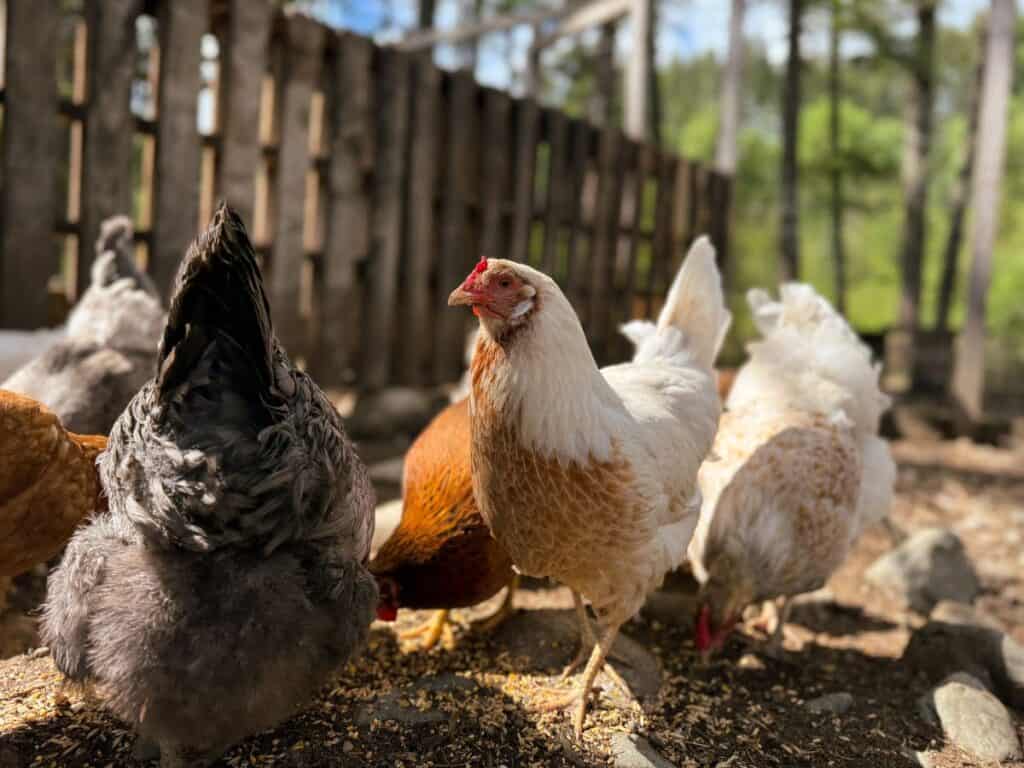
Are Chickens Easy To Care For?
Yes, chickens are low maintenance! Like any animal the basics of fresh food, fresh water, shelter, and space to move about are all essential to their health and well being. Large food and water containers often take some of the daily tasks away, making it so you only have to feed them every few days to weekly. Keeping the coop clean is another task that needs to be done, but it does not need to be done daily. Depending on your set up, this can be done weekly, bi-weekly and even monthly.
Diving into Beginner Chicken Keeping:
Choosing the Right Chickens:
Starting with a hardy breed, that is suited for beginners, is a great way to set yourself up for success. Popular options include Rhode Island Reds, Leghorns, Barred Rocks, Orpingtons, Australorps & Easter Eggers—to name a few! These breeds are resilient and good layers. Perfect for a beginner flock, that would like high production of eggs.
If you want to move into expanding the rainbow of your egg basket, I highly recommend breeds like:
- Blue & Black Copper Marans- Lay a very dark chocolate eggs
- Olive Eggers or Moss Eggers- A cross breed that lays varying shades of green eggs
- Cream Legbars – Lay a bright blue egg
- Ameraucanas – Lays a bright blue egg
- Welsummer- Lays a rich brown, often speckled
- Silverudds- Lay a mossy green/grey egg

Setting Up Your Coop:
A secure, well-ventilated coop is essential. You want to not only make sure your chickens cannot escape, but also that predators stay outside! Covering any holes, even very small ones with things like chicken wire or hardware cloth. If you think to yourself “Oh nothing can fit through there.” – cover it, it probably can! Depending on your geographical location, will determine what sort of predators you need to be aware of. For me it is mainly: Raccoons, Minks, Otters, and Aerial Birds.
Digging your wire down 6-12″ along the bottom of your outdoor run area can really help stop predators from digging under the fence to get in your coop. Our run is very large and it is not 100% secured from predators, but our coop is! All of the birds get locked in at night, and we haven’t had any issues. It will depend on what you have in your area. Maybe you have a lot of aerial birds, then you may need a covered run. Or foxes and coyotes that can dig and get in! Those are the sorts of decisions you will have to make.

Your coop should provide:
- Space: About 3-4 square feet per chicken inside the coop, and at least 8-10 square feet in the outdoor run.
- Protection: Fencing to keep predators out.
- Nesting boxes: One for every 3-4 hens for laying eggs.
- Perches: Elevated roosts for chickens to sleep comfortably.* Ensure your roosts are higher than your nesting boxes*
Cleaning & Bedding:
- There are a few different ways you can set up your coop, for efficient cleaning. Some of the options:
- Deep Litter Method: This is when a thin layer of bedding is added weekly, and allowed to accumulate over several months. A few times a year everything is taken out, and you begins again. The bedding underneath begins to decompose over time. There are many benefits to using this method.
- Poop Shelf Method- This is the opposite of the “deep litter method”, as you will be cleaning the shelf out daily, but it is a quick easy task. Building a shelf underneath the roosting bars, allows all of the poop to accumulate there. It is then clean off frequently, making for a very tidy coop.
- Or you can be like me, I just have a regular coop, and I clean the bedding out every 1-2 weeks, It works well for my mild climate.
- Bedding Options: Shavings, Hemp, or Straw.
Feeding Your Flock:
I feed our chickens a balanced layer pellet, hen scratch, black oiled sunflower seeds & all of our kitchen and garden scraps! Some people choose to mix up their own grain mix, for us that isn’t feasible but if you can source the individual ingredients from your local feed store it is a great option!
Laying hens need constant access to free choice oyster shells. While layer pellets are formulated for laying hens, they still need extra calcium. You can also supplement them with your egg shells, but I would suggest washing, and heating the egg shells and crushing them into a powder first. As feeding them whole egg shells, can create the habit of egg eating. Sometimes once a chicken learns how great their own eggs are, they will start snacking on them! This is a really frustrating habit to break, while I know people that feed eggs directly back to their chickens, I never want to risk it.
Free range chickens will often go through less feed, and they do not always require access to “grit”. Grit is comprised of tiny rocks, that chickens keep in their croup to help them digest food. If they are kept in a run, they should have constant access to grit.
Feeding requirements by age:
- Chicks(0-6 weeks)- 20% protein Chick Starter
- “Teenager” Chicks (6- POL)- A Grower Feed
- Adult Laying Hens- Layer Feed 16-18% (I usually move to a higher % of protein in the winter when less forage is available)
I have seen some debate over whether chicks can just move from chick starter, right onto laying pellets. What I have learned is that moving them onto layer feed before they are laying can be harmful for their kidneys. Due to the nutritional content of the feed. Sometimes this can be tricky, especially if you are adding younger birds in with an existing group of layers. What I have done is feed the entire flock grower, and ensure they have extra calcium available, until the younger birds are ready to lay and can be on layer feed. All of this will also depend on what is available in your area, I know that some feed companies have what is called an “all flock” feed, and that might be an option as well. It’s important to speak with your local feed store about what they have, as they are often a wealth of knowledge.
What about Roosters?
Roosters in general get a pretty bad rep. Most people you know have a story about a nasty rooster from their childhood, that went after them! There are pros and cons to keeping roosters, and some city limits will not allow roosters in a backyard flock- due to the noise.
Pros to keeping a rooster in your flock:
- Protection and Danger alarm
- Fertilized Eggs
- Some can be quite sweet and beautiful
Cons to keeping a rooster in your flock:
- They can be mean
- They are noisey
- Can be aggressive with hens

Getting Your First Chickens:
There are a few different ways that you can go about getting your first chickens:
Getting Chicks:
- Typically you can find chicks for sale in the spring time. Chicks are significantly cheaper than buying adult chickens, and they are fun to have and raise yourself, especially if you have kids.
- Chick Care Requirements:
- A heat source until they are 8 weeks; either a heat lamp or brooder plate.
- Food: Chick Starter
- A secure enclosure, inside away from predators.
- Small feeder & waterer
- Be warned: Chicks grow fast, and they get stinky quick! People will often keep them in the house, but a garage, a barn or shed can be a better option. As long as you can run power for the heat source.
- Certain breeds can be sexed at hatch, these are called “auto-sexing”. Most breeds are “sex linked”- meaning they can’t be sexed until they get a bit older. This can be the downside of getting chicks, vs. adult birds.
Hatching Eggs:
- It can be a fun experience to get an incubator, and do the hatching yourself. This takes a bit more research and knowledge base. The incubators they make are fairly hands off. Again like with chicks, you will need a proper chick set up, and there is no way to determine if you are getting roosters or hens.
Buying Point of Lay or Adult Birds:
- Point of Lay:
- “Point of lay” is a term used to describe young “pullets” or hens, that are 16-22 weeks old, and are about to reach maturity and begin laying eggs.
- These can be a great option for beginner chicken keeping, because they are off heat and can go directly into your coop set up.
- You also know that you are getting only females, and they will start laying eggs soon.
- The downside is that they can be more expensive.
- Adult Birds:
- Sometimes you can find people selling adult birds, either getting out of chickens, or decreasing their flock. This can be a great option for a turn-key flock for beginner chicken keeping, but be careful that you are checking the birds over for any parasites or health concerns. Often times there can be reasons that they are parting with the birds- egg eating, poor health, minimal laying, old age etc.
- Do your homework for this option!

Health issues to watch for:
Parasites:
- Mites & Lice
- Symptoms: Feather loss, excessive preening, pale combs, reduced egg laying.
- Treatment: Dust with mite powder, clean coop thoroughly. Medications like: ivermectin, permethrin, or pyrethrin, may be used. (Check with a veterinarian or feed store for directions on these, as some may require egg withdrawal.)
- Worms
- Round worm, tape worms, and gapeworms are most common.
- Symptoms: Weight loss, diarrhea, and breathing issues.
- Treatment: deworming with either Fenbendazole, Ivermectin, Piperazine, Levamisole (consult veterinarian when using medications).
- Natural Deworming Options: Pumpkin seeds, garlic, diatomaceous earth, and apple cider vinegar.
- Round worm, tape worms, and gapeworms are most common.
- Coccidiosis (most common in chicks)
- Protozoa attacking the gut lining.
- Symptoms: Bloody or watery diarrhea, puffed up feathers, weight loss, and lethargy.
- Treatment: Treat with Amprolium (Corid). Feed medicated chick starter for chicks to prevent cocci.
- Protozoa attacking the gut lining.
Reproductive Issues:
- Egg Binding
- Symptoms: Straining, lethargy, swollen abdomen, tail positioned down, no egg production.
- Treatment: Warm bath and massage. Calcium supplement, and consult vet if severe.
- Prolapsed Vent
- Caused by pushing out of vent tissues
- Symptoms: Red tissues protruding from vent, bleeding, pecking from flock mates.
- Treatment: Isolate bird, gently clean area and lubricate prolapsed tissues, reinsert tissue (vet assistance often needed), increase calcium intake.
- Caused by pushing out of vent tissues
Diseases:
- Marek’s Disease
- Symptoms: Paralysis, weight loss, visions issues, tumours.
- Treatment: There is no cure for Marek’s disease, but chicks can be vaccinated for prevention.
Infections:
- Bumblefoot
- Caused by bacterial infection in a foot injury.
- Symptoms: swollen, hot, scabby foot pad, & limping.
- Treatment: Soak in epsom salts, apply antibiotic ointment and keep clean.
- Caused by bacterial infection in a foot injury.
Environmental or Feed Issues:
- Heat Stress
- Symptoms: Panting, holding wings out, lethargy, droopy comb, sudden death.
- Treatment: Provide shade, proper venting in coop, electrolytes in water, mist coop and run area.
- Nutritional Deficiencies
- Such as: Vitamin A, D3, calcium, & B-Complex
- Symptoms: Poor feathering, soft eggs, curled toes or leg issues, poor growth.
- Treatment: provide proper balanced diet, supplement with vitamins and electrolytes, offer free choice calcium.
- Such as: Vitamin A, D3, calcium, & B-Complex
Respiratory Issues:
- Respiratory Infections
- Symptoms: Sneezing, wheezing, nasal discharge, watery eyes, and lethargy.
- Treatment: Isolate sick bird, keep coop well ventilated, products like VetRX can be helpful. Antibiotics may be necessary (consult a vet).
- There are some severe ones such as: Infectious Bronchitis and Mycoplasma
This might seem like a long list of ailments, and it is not intended to scare anyone off! Some of those things I have never dealt with in many years of chicken keeping. The reason I am listing them, is that it is always good to be aware, especially for beginner chicken keeping! Sometimes the only way you learn things in livestock, is to experience them. Well cared for chickens will often be completely healthy. Some things like parasites are very common and can be avoided with preventative supplements and treatments.
Can you have chickens in the city?
Most cities will have guidelines on what they allow, I know within city limits near us, they allow 6 hens and no roosters. 6 hens is a great place to start and would give you an abundance of eggs. You will have to investigate the rules and regulations in your area, but there are many places that do allow a backyard flock.
With the proper setup and care, you’ll soon enjoy fresh eggs, the joy of watching your chickens roam, and the satisfaction of raising your own backyard flock.
Are Chickens for you?
Overall chickens are often the first livestock people accquire, and for good reason! They are easy to manage, inexpensive and produce amazing eggs & meat! If you don’t mind creating the proper set up, and doing your initial due diligence, it will really pay off in the long run! With some simple daily chores, and maintenance, you will benefit greatly from having chickens!
Benefits of Getting Chickens:
Chickens offer a variety of practical, environmental, and emotional benefits. Especially for backyard or small scale keepers. Some benefits and advantages of having chickens are fresh eggs, natural pest control, organic fertilizer, reduced food waste, and the enjoyment they’ll bring! Chickens are social creatures, they have such funny personalities and are a joy to observe and get to know!
I have seen some really complex set ups, ideas, and overall management strategies for backyard flocks, but beginner chicken keeping can be simple, and there are so many ways to make it easier!
